
Natural volume and elasticity changes
With time, the lips can lose some natural volume and surface elasticity, leading to flatter contour or reduced definition.
Lip concerns may involve border definition, natural asymmetry, volume, hydration or lines in the surrounding skin.
The images show a softened lip border and vertical perioral lines. Other concerns may include asymmetry, reduced fullness, downturned corners or surface dryness.
AI-generated illustrative images showing two common presentations. They are not photographs of M+ patients and are not intended for self-diagnosis.
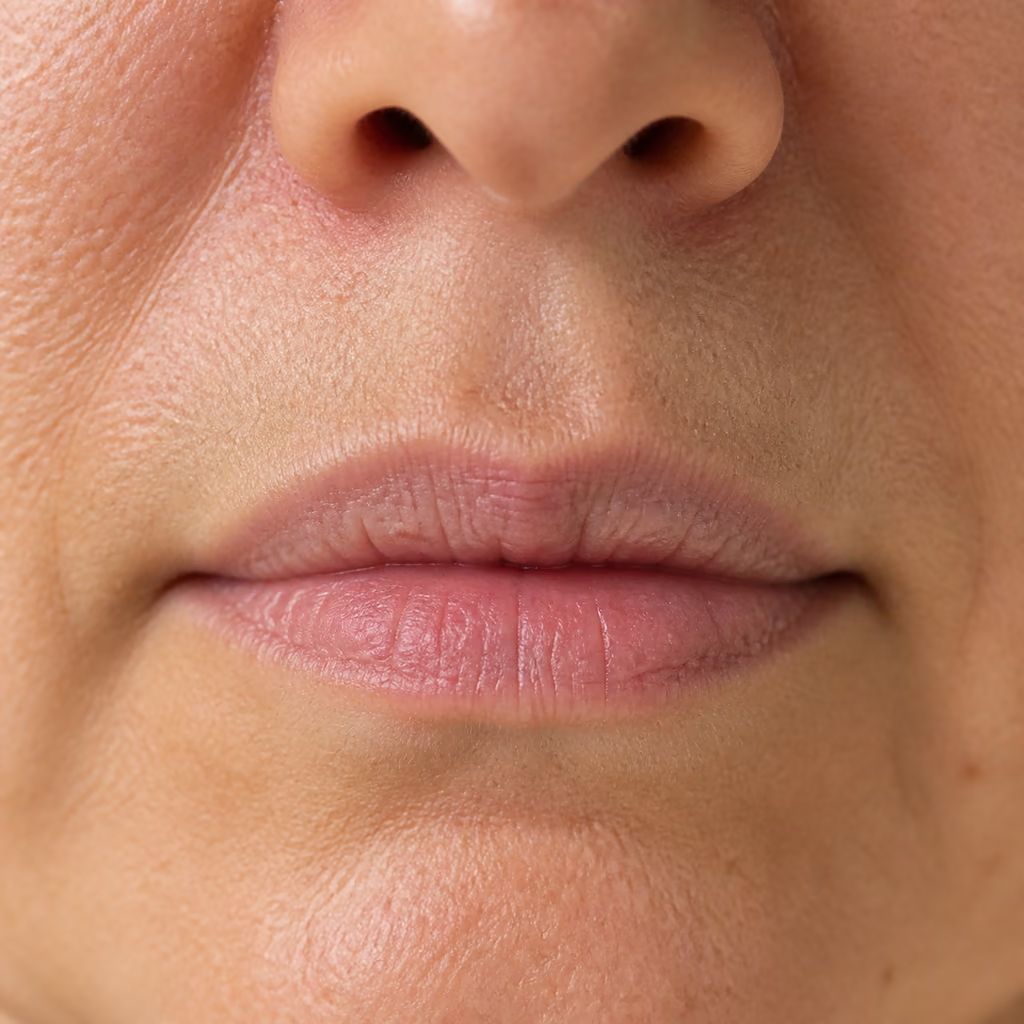
The vermilion border may become less sharply defined over time.
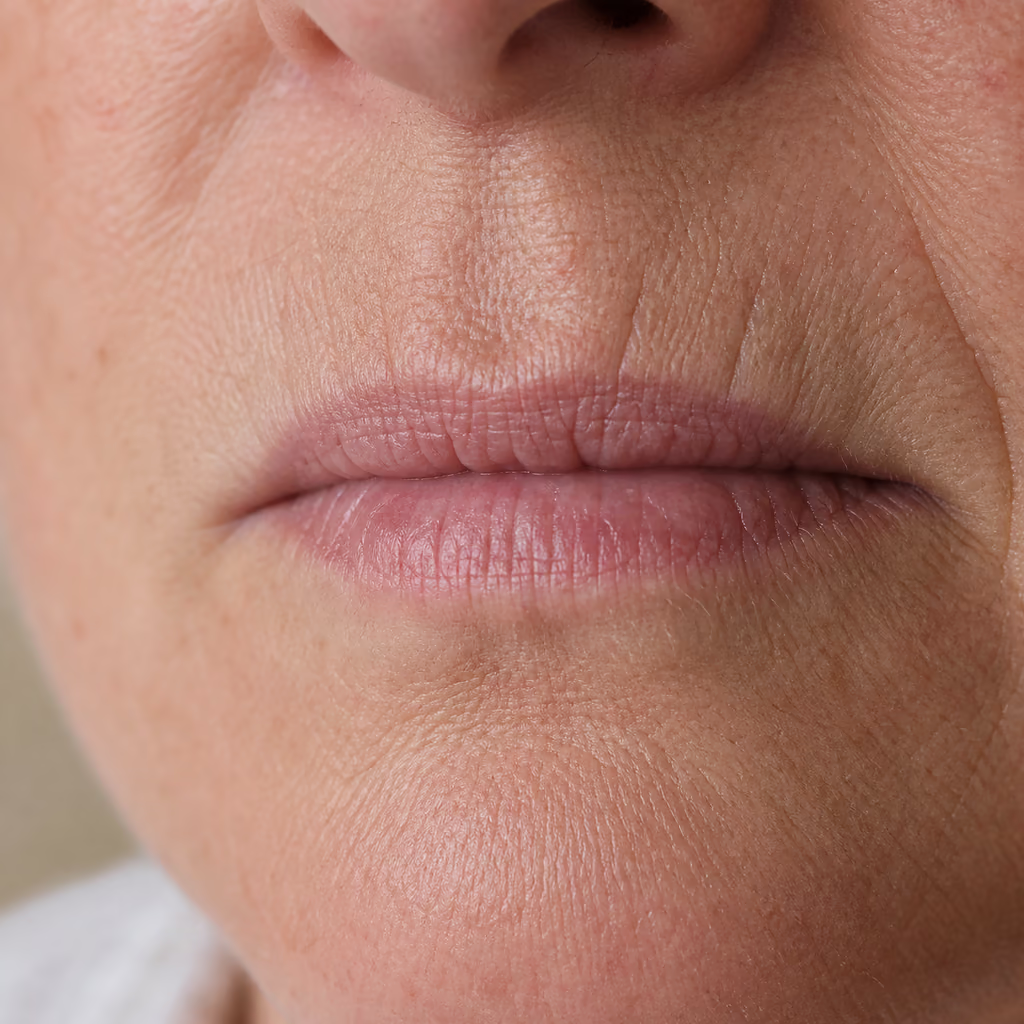
Perioral lines reflect repeated movement and changes in the surrounding skin.
Lip shape and perioral lines are influenced by movement, hydration, sun exposure, volume changes and natural ageing of the surrounding tissues.
With time, the lips can lose some natural volume and surface elasticity, leading to flatter contour or reduced definition.

Movement-driven creasing around the mouth
Speaking, smiling and pursing create repeated folds around the mouth, which can gradually remain as fine static lines.
Chronic sun exposure can thin the skin around the lips and reduce support, making lines appear more prominent.
Dryness can emphasise roughness and make lip borders appear dull or uneven.
Some people naturally have thinner lips, asymmetry or more movement in the perioral area.
Lip variation is normal. Some people seek advice about definition, symmetry or surrounding lines, while others prefer no treatment.
A softer border can change the way lip products apply or spread beyond the edge.
Fine lines may become more visible with dryness or repeated movement.
Assessment considers the lips, teeth, chin and surrounding movement rather than lip size alone.
Lip shape and symmetry vary from birth, while border definition and perioral lines commonly change over time.
Lip proportions, asymmetry and projection are individual features rather than defects.
Speaking, smiling and pursing repeatedly fold the skin around the mouth.
The lips and surrounding tissues gradually change in volume, elasticity and structural support.
Both can accelerate visible change in the delicate skin around the mouth.
Sun protection and barrier support can reduce avoidable dryness and UV-related change but cannot alter natural anatomy.
A persistent ulcer, sore, lump, bleeding area or changing patch on or around the lip should be assessed by a GP, dentist or dermatologist before cosmetic treatment.
We assess lip anatomy, movement, symmetry, border definition and the surrounding skin before discussing suitable options.
Planning is based on your facial proportions and goals rather than a standard lip shape.
Lip volume and perioral lines may have different contributors and treatment categories.
Subtle, staged changes may be more appropriate than trying to address everything at once.
Suitability, limitations, risks and maintenance are discussed before any decision.
Consultation-led options for lip shape and definition where clinically suitable.
Options that may be considered for selected movement-related perioral lines.
A skin-remodelling option considered for selected surrounding texture concerns.
An energy-based option considered for selected perioral texture concerns.
A consultation is used to understand your concern, relevant history and goals before any options are discussed. An appointment does not commit you to treatment.
We discuss what you have noticed, your goals, relevant history, current products or treatments, and any symptoms or triggers.
Your clinician assesses the visible pattern and relevant skin, tissue or structural factors that may influence suitability.
Where appropriate, we explain possible options, alternatives, limitations, relevant risks, likely downtime and costs without pressure to proceed.
Treatment is planned only if it is suitable and you wish to proceed. We explain preparation, aftercare and review timing when relevant.
Book a consultation to explore suitable pathways with our clinical team.
Have questions? Click here to contact us.